
There’s a difference between drinking Bourbon and tasting it. Here’s how to slow down, engage your senses, and taste like a pro on your next Kentucky Bourbon Trail® getaway.
Trail Tips
Kentucky Bourbon Trail® Guide to Tasting Bourbon
So how do you taste Bourbon? The answer might differ depending on who you ask. Some people insist tasting is all about the nose. Others will talk about the shape of the glass or point out a certain technique. In truth, the real answer probably involves all of the above.
More importantly, the actual act of tasting, unlike drinking, is a trainable skill that rewards you with experience over time.
Every Bourbon tasting experience breaks down into four components:
- Glassware: why the vessel you use changes what you smell and taste
- Appearance & aroma: what color and nosing reveal before the first sip
- Taste (the Kentucky Chew): how to coat your palate and unlock flavor
- Finish: what lingers, and what it tells you about the pour
What glass should you use?
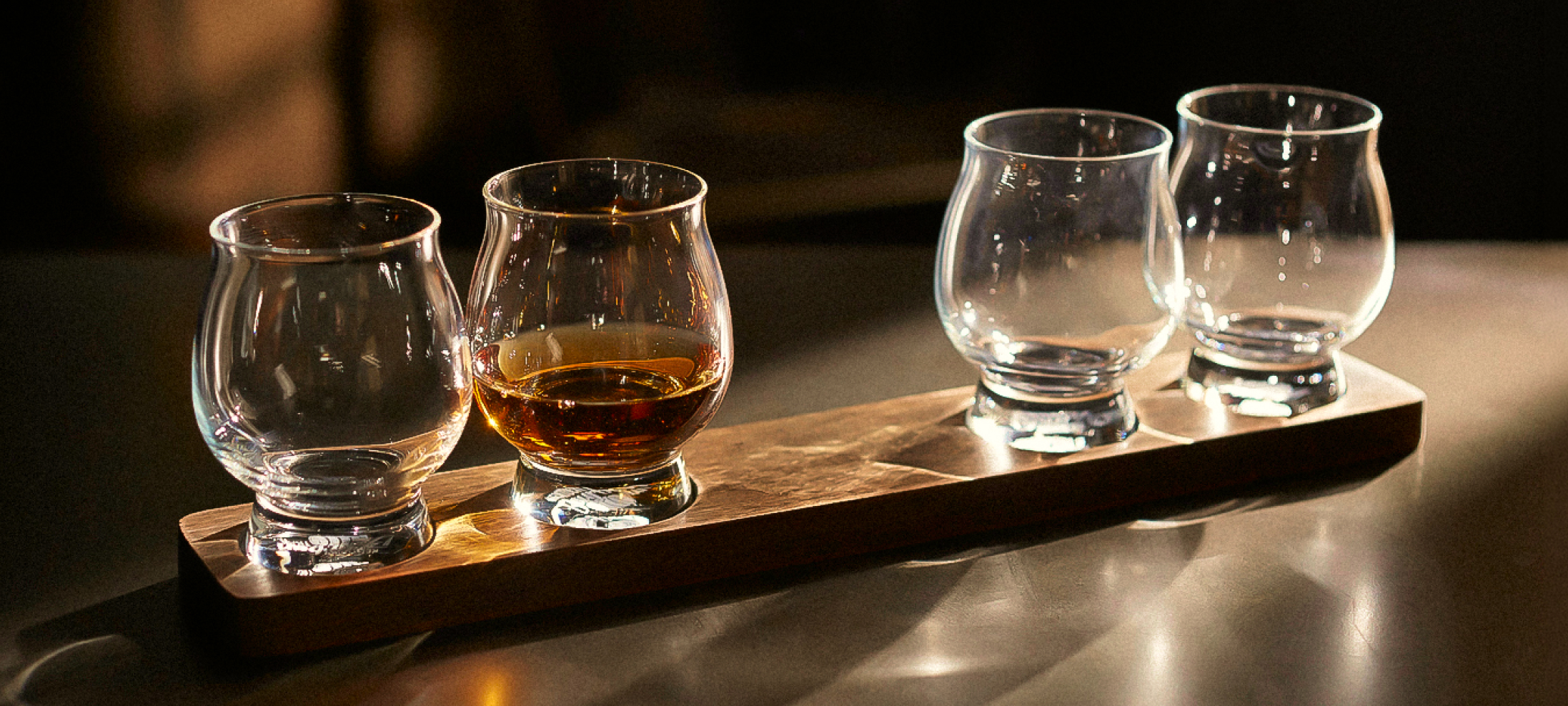
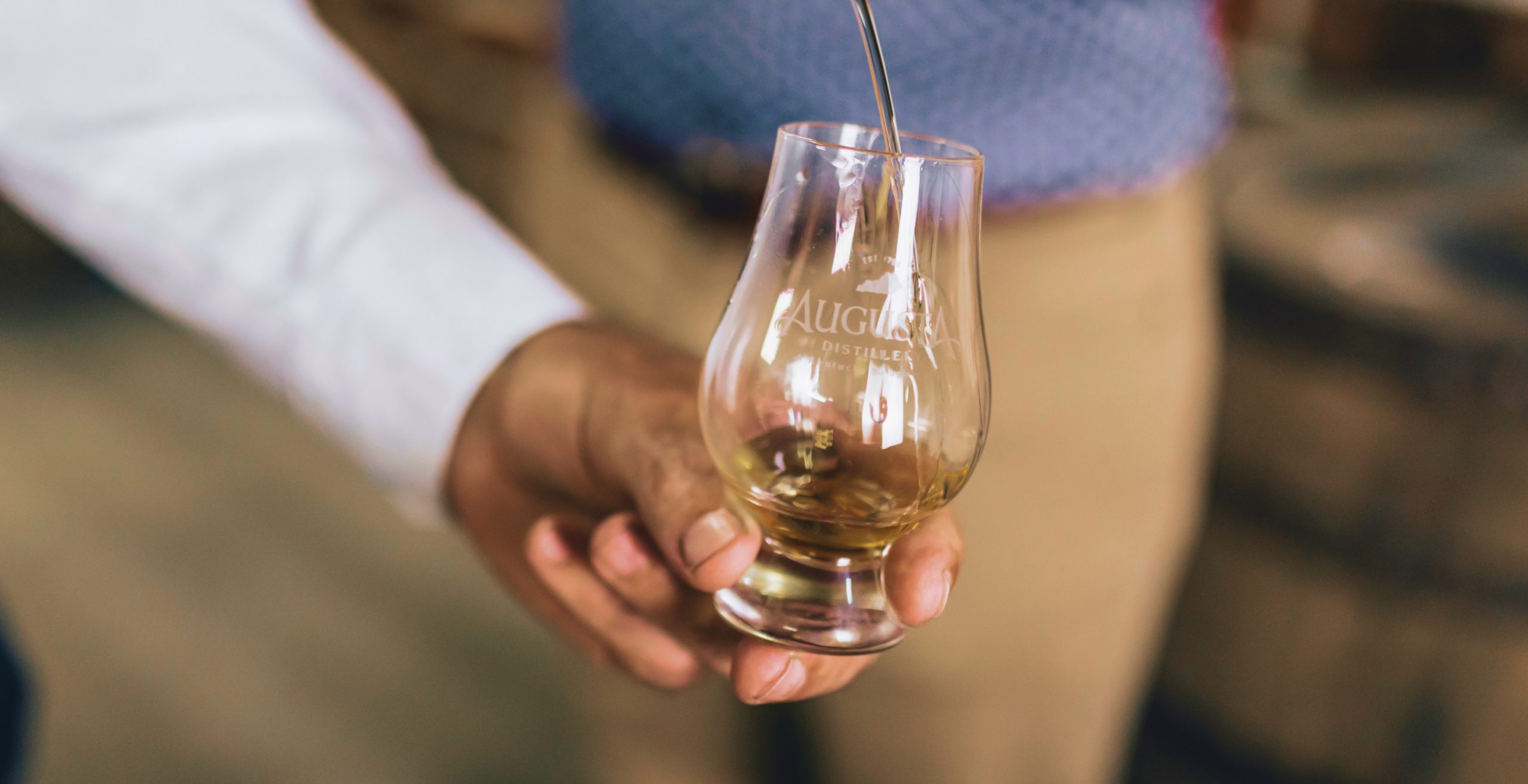
As a material with unique texture and properties, glass plays a big part in the Bourbon tasting experience—especially when it comes to nosing, observing the legs or even oxygenation. Most distilleries prefer to use a tulip-shaped glass. That’s because its narrow mouth allows aromas to expand while the wide bowl lets you swirl the spirit to release volatile compounds—something a straight-sided rocks glass can’t do.
For those seeking a different experience, there is an official Kentucky Bourbon Trail® tasting glass. Released in 2017, it was designed alongside Kentucky master distillers specifically for tasting Bourbon. This 8-ounce specialty glass features a heavy base (sham) for stability, a wide bowl for swirling and increased oxygenation, and a slightly flared rim built to accommodate high-proof Bourbon.
You really can’t go wrong with either one. What matters most is that you’re sipping with intention.
Why look and smell before you taste?
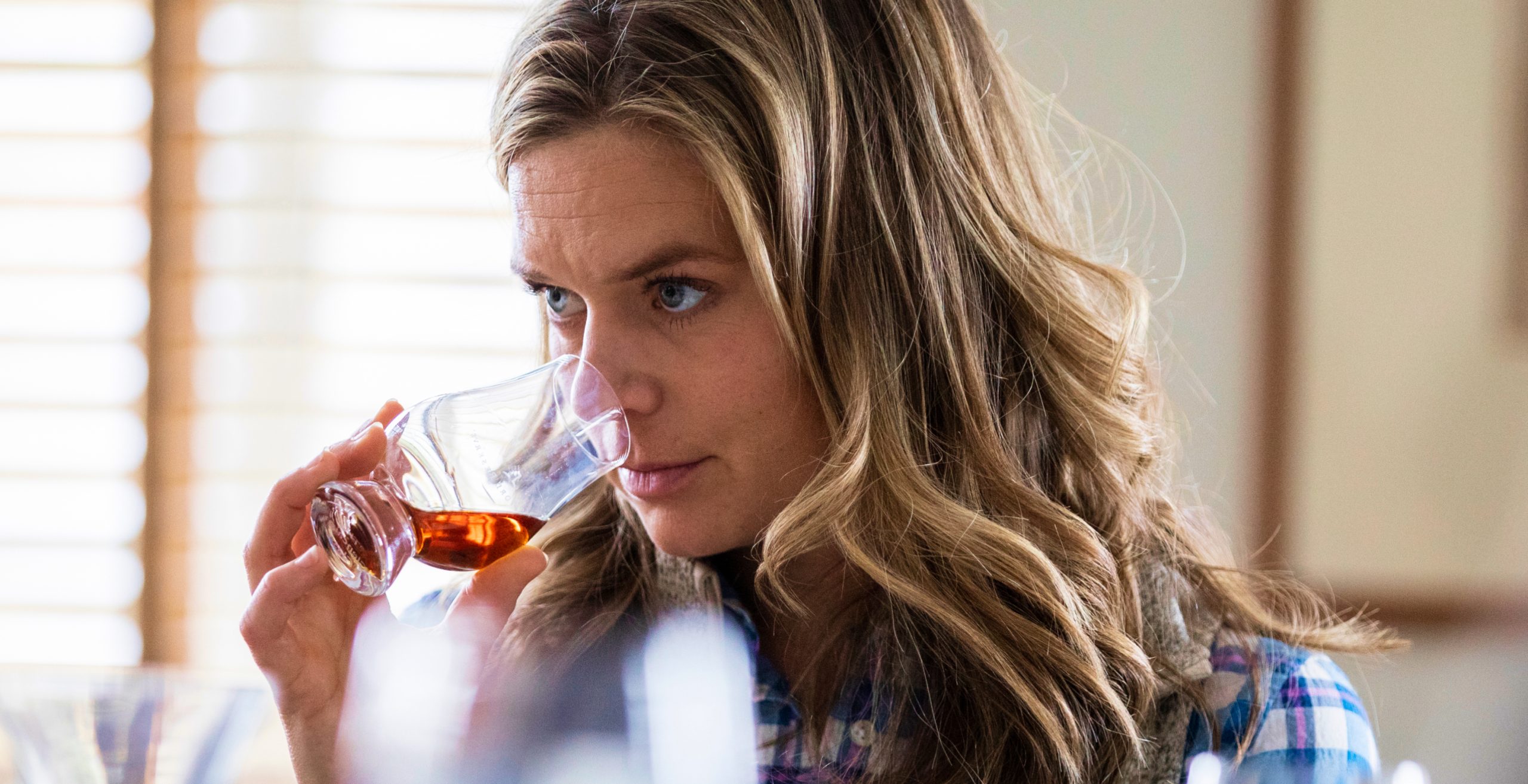
Color offers early clues about age, char level, and where the barrel rested in the rickhouse—though a lighter color doesn’t always mean a lighter flavor. Aroma matters even more: your nose can detect far more nuance than your tongue’s five basic tastes (sweet, sour, bitter, salty, umami), so most of what you perceive as “taste” actually comes from smell.
How do you properly nose Bourbon?
Nosing correctly means working the glass in stages, not just sniffing once and moving on. Follow these steps:
- Keep your lips slightly parted while nosing
- Gently move the glass side-to-side from nostril to nostril for a fuller sensation
- Swirl gently to release esters and volatile aromatic compounds
- Keep your nose close to the glass to detect foundational notes like grain
- Pull back for secondary notes like florals or spice
- Smell the back of your hand between pours to reset your nose
What is the Kentucky Chew?
Popularized by the legendary Master Distiller Booker Noe, the Kentucky Chew is a tasting technique where you let a small sip sit on your palate and slowly “chew” it before swallowing. This coats your entire mouth, allowing heat and flavor compounds to unfold fully instead of overwhelming your tongue all at once.
- Take a small sip; don’t swallow right away
- Move it around your mouth to coat your palate evenly
- To chew, kind of smack your lips and mouth — you should feel the sensation the most at the roof of your palate
- Swallow, then notice the “Kentucky Hug,” which is the warm sensation that follows
- Think about the aromas smelled before you took a sip, before broadening your mindset to see what else you might be picking up
- For higher-proof Bourbons (110+), a few drops of water can open up additional flavor
What does the finish tell you about a Bourbon?
A short finish means the lingering taste and warmth fade quickly, often in under 10 seconds. It shouldn’t be considered a flaw, however, as the taste it produces feels crisp, light and refreshing.
Conversely, a long finish means that flavors and warmth stay with you for anywhere between 30 seconds to several minutes, and it is usually a sign of high-quality, complex older Bourbon. For another layer of the tasting experience, pay attention to any new or evolving flavors that appear only after swallowing.
Ready to taste for yourself?
Every Kentucky Bourbon Trail® distillery offers its own guided tasting experience, and no two are exactly alike. Whatever your plans, we recommend visiting no more than three distilleries a day.
Ready to put these techniques to use? Build Your Own Bourbon Trail® and start planning your next getaway.
Related Articles
-

A Bourbon Beginner’s Guide to the Kentucky Bourbon Trail®
A Bourbon Beginner’s Guide to the Kentucky Bourbon Trail® -

Why the Bourbon Trail® Experience Is One of Kentucky’s Top Tourist Attractions
Why the Bourbon Trail® Experience Is One of Kentucky’s Top Tourist Attractions -
Travel Blogger Tips for Your Kentucky Bourbon Trail® Distillery Visits
Travel Blogger Tips for Your Kentucky Bourbon Trail® Distillery Visits